Is Cleveland becoming one of the smartest real estate markets in Ohio?

The Cleveland housing market has changed dramatically over the past few years. What was once considered an overlooked Midwest market is now drawing attention from home buyers, first time investors, and even out of state real estate professionals searching for long term opportunities. The biggest reason is simple. Cleveland still offers something many major cities have lost completely, and that is affordability combined with growth potential.
In 2026, buyers are becoming far more cautious with money. Rising living costs and higher interest rates have forced people to think beyond flashy real estate trends. Instead of chasing overheated markets, many are now looking for cities where they can actually build equity without taking on overwhelming financial pressure. Cleveland fits into that conversation naturally because the market still provides realistic entry points for buyers who want long term value instead of short term hype.
At the same time, investors are paying closer attention to Ohio as a whole. Many buyers who originally searched for homes for sale in cincinnati ohio or explored cincinnati homes for sale are now comparing Cleveland because the numbers often make stronger financial sense.
Understanding the current Cleveland housing market
The current Cleveland housing market remains competitive but balanced compared to many national markets. Home values have continued rising steadily, but the increases have been healthier and more sustainable than the extreme spikes seen in some major metro areas after 2020.
As of 2026, median home prices in Cleveland generally range between $185,000 and $260,000 depending on neighborhood, property condition, and proximity to downtown areas. This price range still places Cleveland among the more affordable urban housing markets in the United States.
The rental market has also remained strong. Average monthly rent now falls between $1,250 and $2,000 in many desirable areas. That continued rental demand is one of the biggest reasons investors are showing renewed interest in Cleveland properties.
Here is a quick look at the current market conditions:
| Market Indicator | Cleveland 2026 Estimate |
| Median Home Price | $185,000 to $260,000 |
| Average Rent | $1,250 to $2,000 |
| Annual Appreciation Forecast | 4% to 6% |
| Inventory Level | Moderately Low |
| Rental Demand | High |
| Investor Activity | Increasing |
These numbers reflect a market that continues growing steadily without becoming excessively overheated. That balance is important because sustainable growth typically creates stronger long term opportunities for both homeowners and investors.
Why Cleveland is attracting more real estate investors
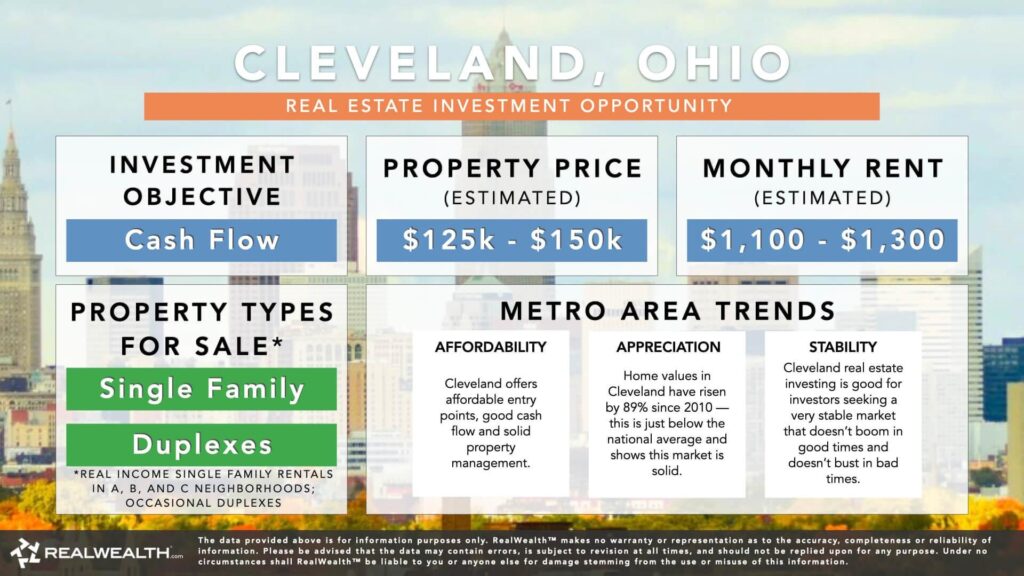
Real estate investors are becoming more strategic than ever. Instead of focusing only on rapid appreciation markets, many are now prioritizing affordability, stable rental income, and lower risk. Cleveland offers all three.
One major advantage is the relatively low entry cost. In cities like Austin, Miami, or Los Angeles, investors often need substantial capital just to purchase a small property. Cleveland allows buyers to enter the market at far more manageable price points while still benefiting from strong tenant demand.
Economic stability also plays a major role in Cleveland’s forecast. Large employers, hospitals, educational institutions, and manufacturing sectors continue supporting local employment. Organizations like Cleveland Clinic contribute significantly to the city’s economy and help maintain a stable workforce. A stable workforce naturally creates a stronger rental market because people need long term housing close to employment centers.
Another factor driving investor attention is Ohio migration patterns. Some buyers initially focused only on houses for sale in cincinnati ohio eventually discover that Cleveland offers stronger cash flow opportunities due to lower purchase prices and competitive rental demand.
Which Cleveland neighborhoods show the most potential?
Location still determines everything in real estate. Even in a growing market, some neighborhoods will outperform others over time.
Areas like Ohio City, Tremont, Detroit Shoreway, and parts of Lakewood continue attracting strong buyer interest because they combine walkability, lifestyle appeal, restaurants, redevelopment projects, and proximity to downtown Cleveland. These neighborhoods appeal not only to homeowners but also to younger renters and professionals who want urban convenience.
Suburban communities surrounding Cleveland are also experiencing increased demand from families seeking affordability and better school systems. Buyers who feel priced out of larger national markets often discover they can purchase larger homes with more land in these suburban areas without sacrificing overall quality of life.
The smartest buyers focus less on chasing the cheapest property and more on understanding long term neighborhood trends. Infrastructure projects, business development, transportation improvements, and population growth all influence future property values.
Will Cleveland home prices continue rising?
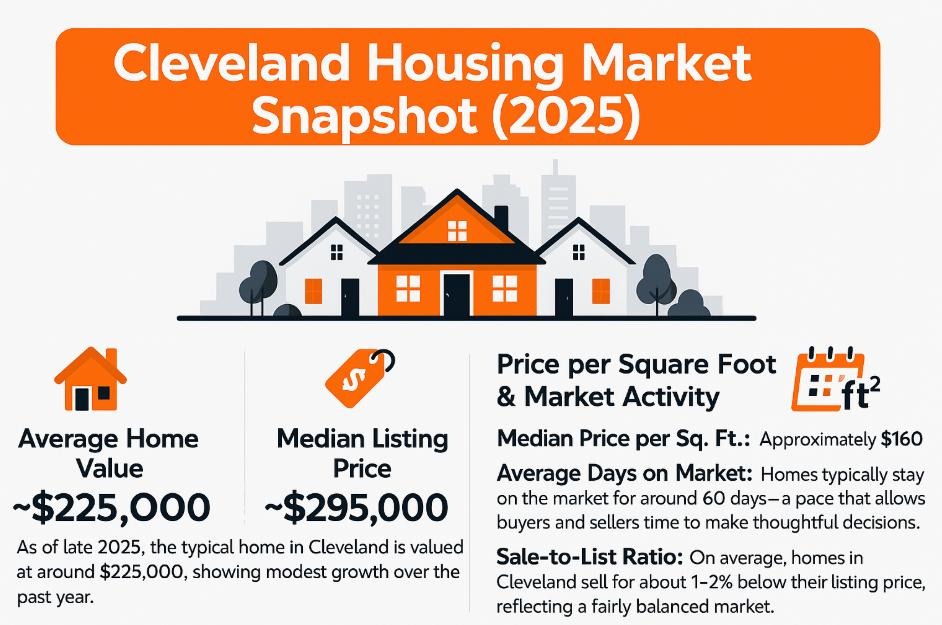
Most signs point toward continued appreciation in Cleveland throughout 2026, although experts expect growth to remain moderate rather than explosive. Forecasts currently suggest annual appreciation rates between four and six percent in many areas.
That may sound slower compared to some pandemic era housing booms, but moderate appreciation is actually healthier for long term market stability. Rapid price spikes often create unsustainable conditions that eventually lead to corrections. Cleveland’s growth appears more connected to real economic fundamentals and housing demand.
Inventory remains one of the key reasons prices continue rising. Many neighborhoods still have fewer available homes than active buyers. When demand stays high and inventory remains limited, prices naturally continue increasing.
Another important factor is affordability compared to national averages. Buyers leaving expensive cities increasingly view Midwest markets as practical alternatives. Cleveland benefits directly from that trend because it offers urban amenities without extreme housing costs.
Renting versus buying in Cleveland
Many people entering the Ohio housing market begin by looking for rentals. Searches like houses for rent in cincinnati ohio or house for rent cincinnati ohio are common among buyers trying to understand affordability before committing to ownership.
However, rising rental prices are changing how many people think about housing. In Cleveland, rents have continued increasing steadily, especially in renovated neighborhoods and suburban communities with strong school systems.
For buyers planning to stay long term, ownership often becomes financially smarter than renting. A renter paying $1,700 monthly may spend more than $20,000 annually without building any equity. A homeowner making a similar monthly payment gradually builds ownership while also benefiting from property appreciation over time.
This shift in thinking explains why many renters searching online for ways to rent a house cincinnati eventually begin exploring ownership opportunities across Ohio markets like Cleveland.
The biggest mistakes buyers make in this market
One of the most common mistakes buyers make is assuming affordable properties automatically equal good investments. A cheap house in a declining neighborhood can quickly become a financial burden rather than an opportunity.
Another major mistake is buying emotionally instead of strategically. Some buyers rush into purchases because they fear missing out on the market. Others become overly focused on cosmetic details while ignoring critical issues like location trends, structural condition, or future resale potential.
Skipping inspections is another serious risk, especially in older Cleveland properties. Many homes have strong architectural character, but hidden repair costs involving plumbing, roofing, electrical systems, or foundations can become expensive very quickly.
Investors also sometimes underestimate operating expenses. Taxes, maintenance, vacancies, insurance, and property management all affect profitability. Strong investment decisions always come from realistic financial planning rather than optimistic assumptions.
Expert advice for first time buyers in Cleveland

For first time buyers, Cleveland offers one of the more accessible entry points into homeownership compared to many national housing markets. Still, entering the market successfully requires planning and patience.
The best starting point is understanding your financial comfort zone instead of simply borrowing the maximum amount a lender approves. Monthly affordability matters far more than stretching your budget to buy the biggest house possible.
Getting pre approved before searching seriously also provides a major advantage. Sellers often prefer buyers who already have financing secured because it reduces uncertainty during the transaction process.
Buyers should also study neighborhoods carefully before making decisions. Areas experiencing redevelopment or infrastructure improvements often create stronger long term appreciation opportunities.
Most importantly, first time buyers should think beyond the current moment. A property purchase is not only about where you live today. It is also about building future stability and financial growth.
That mindset matters. Invest in yourself. Invest with us.
Real estate works best when viewed as a long term investment in your future rather than simply a transaction.
Is Cleveland better than Cincinnati for investment?
This debate continues among Ohio buyers and investors because both markets offer unique advantages.
Cincinnati often attracts attention because of population growth and expanding development projects. That is one reason many buyers initially focus on cincinnati homes for sale or browse homes for sale in cincinnati ohio while researching Ohio markets.
Cleveland, however, frequently offers stronger affordability and better rent to price ratios. Investors prioritizing monthly cash flow often find Cleveland more attractive because purchase prices remain relatively low while rental demand stays strong.
There is no universal answer because investment success depends on strategy. Buyers focused primarily on appreciation may prefer Cincinnati in some cases, while investors seeking steady rental income may lean toward Cleveland.
The key is understanding which market aligns best with your personal financial goals rather than following trends emotionally.
How interest rates are shaping the Cleveland forecast
Interest rates continue influencing buyer behavior throughout the housing market. Higher mortgage rates reduced affordability in recent years, causing some buyers to delay purchasing decisions.
However, Cleveland handled those challenges better than many expensive markets because entry prices remained comparatively manageable. Buyers could still find opportunities without facing million dollar price tags common in coastal cities.
As mortgage rates stabilize, more buyers are gradually returning to the market. Increased demand could create additional competition in desirable neighborhoods over the next year.
Some buyers continue waiting for dramatically lower interest rates before purchasing, but that strategy carries risks. If rates fall significantly, competition could increase rapidly, pushing home prices higher. In many situations, purchasing a reasonably priced property now and refinancing later may provide a stronger long term financial outcome.
How investors identify the best Cleveland opportunities
Experienced investors rarely chase the most glamorous properties. Instead, they focus on fundamentals.
The strongest opportunities usually exist in neighborhoods with growing employment access, stable tenant demand, infrastructure investment, and low vacancy rates. Investors also carefully analyze renovation costs, taxes, insurance, and realistic rental income projections before purchasing.
Many successful investors target properties needing moderate cosmetic improvements because small renovations can significantly increase rental value and resale potential without requiring massive construction budgets.
Areas near hospitals, universities, and transportation corridors often remain especially attractive because they consistently generate housing demand.
Why Cleveland remains one of the Midwest’s strongest opportunities

National real estate headlines often focus on the biggest and most expensive markets, but long term wealth is frequently built in cities that provide stable growth instead of speculation.
Cleveland continues standing out because it combines affordability, economic resilience, redevelopment, and strong rental demand. The city may not produce overnight millionaire stories, but it offers something more sustainable for many buyers and investors.
As housing affordability becomes a growing concern nationwide, cities like Cleveland are likely to receive even more attention from buyers seeking practical opportunities rather than risky speculation.
For buyers already researching Ohio through searches like houses for sale in cincinnati ohio or houses for rent in cincinnati ohio, expanding that search into Cleveland could reveal stronger long term value opportunities.
Final thoughts on the Cleveland housing market forecast
The Cleveland housing market forecast for 2026 remains positive overall. Home prices are expected to continue rising moderately, rental demand remains healthy, and inventory constraints continue supporting property values.
What makes Cleveland especially attractive is balance. Buyers are not entering a market driven entirely by hype or speculation. Instead, they are entering a city where affordability, demand, and economic fundamentals still align reasonably well.
For home buyers, Cleveland offers an opportunity to build equity in a market that remains accessible. For investors, it provides steady rental demand and manageable entry prices. For anyone focused on long term financial growth, Cleveland deserves serious attention in 2026.
The most successful real estate decisions come from patience, research, and long term thinking. Buyers who approach Cleveland strategically may find opportunities that become increasingly difficult to find in more expensive markets.
Invest in yourself. Invest with us.
Frequently Asked Questions
Is Cleveland a good place to invest in real estate in 2026?
Yes. Cleveland continues attracting investors because of affordability, strong rental demand, and steady appreciation potential.
Will Cleveland home prices keep rising?
Most forecasts expect moderate appreciation between four and six percent depending on neighborhood conditions and inventory levels.
Is Cleveland affordable for first time home buyers?
Compared to many national markets, Cleveland remains relatively affordable and accessible for first time buyers.
Which Cleveland neighborhoods are best for investment?
Ohio City, Tremont, Detroit Shoreway, and Lakewood remain popular because of redevelopment, walkability, and rental demand.
Should buyers wait for lower interest rates?
Waiting may increase competition if rates drop significantly. Many buyers prefer purchasing now and refinancing later if rates improve.